ServicesRoof Inspections
Roof Inspections in Roseville, OH
We go over your roof by hand, look into the attic and trace the spots where water sneaks in, like flashing and pipe boots. You get photos and a plain read on what we saw. If nothing needs doing, we tell you that. If something does, you hear why first.
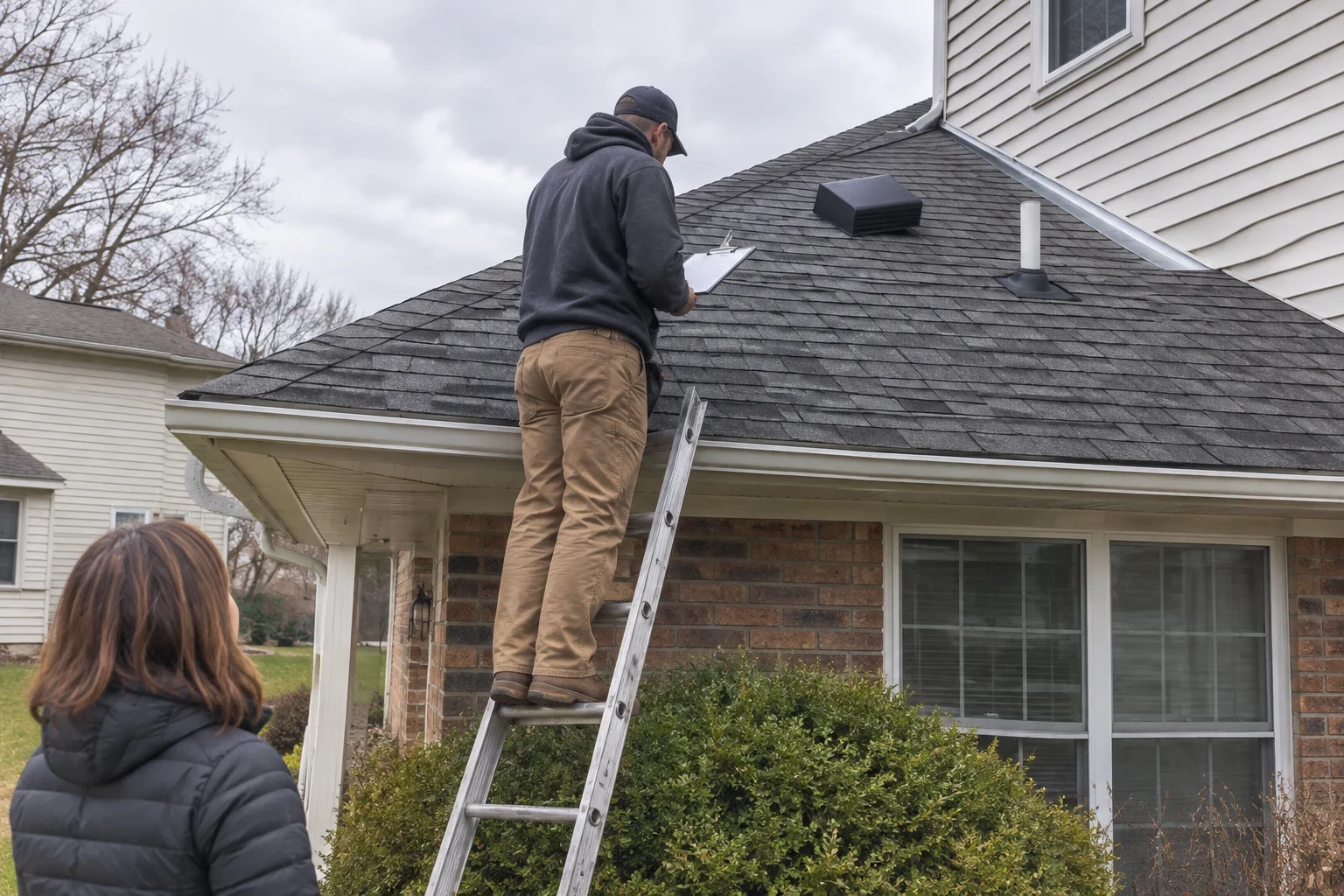
Why a careful look comes first
Roof trouble usually starts small. The rubber collar around a plumbing vent splits. A piece of step flashing pulls away from a wall. A patch of shingles goes bald. Water slips through those gaps for months before a stain ever shows up indoors. Finding them early keeps a cheap fix cheap.
Every job we take on starts this way. We look first and recommend second. You get photos, a short list of what we saw and our honest take on it. Some roofs need a quick roof repair. Some have plenty of years left and don't need us at all. Now and then the decking has gone soft and a roof replacement is the better use of your money. You make the call with the facts in hand.
Ohio winters freeze and thaw over and over. Meltwater runs under a lifted shingle edge, freezes overnight and pushes it up a little more. A visit in spring or fall shows you where that has started.
What we check during an inspection
The shingled surface
We watch for curling, cracked or missing shingles and for bald areas where the grit is gone. We also check the nailing along the eaves and rakes, since wind catches those edges first.
Flashing at chimneys, walls and valleys
Leaks usually start at flashing rather than in the middle of the shingles. We look over the metal at chimneys, sidewalls and valleys for rust, gaps and layers of caulk applied again and again.
Vents, skylights and pipe boots
Every one of these is an intentional opening in the roof. Years of sun dry out and crack the rubber boots, so we test each seal by hand.
Inside the attic
From below, we look for dark or wet decking, rusted nail tips and frost on the boards in cold weather. We make sure air comes in low and leaves high. Without that, summer heat bakes the shingles from underneath and winter snow melts and refreezes at the eaves.
Gutters, soffit and fascia
We follow the water after it runs off the roof. Drooping gutters, soft fascia and gaps in the soffit often come with roof problems, so we note those as well.
Photos and a brief written list
You receive photos and a list sorted three ways: fix now, keep an eye on, and fine for now. All in everyday language.
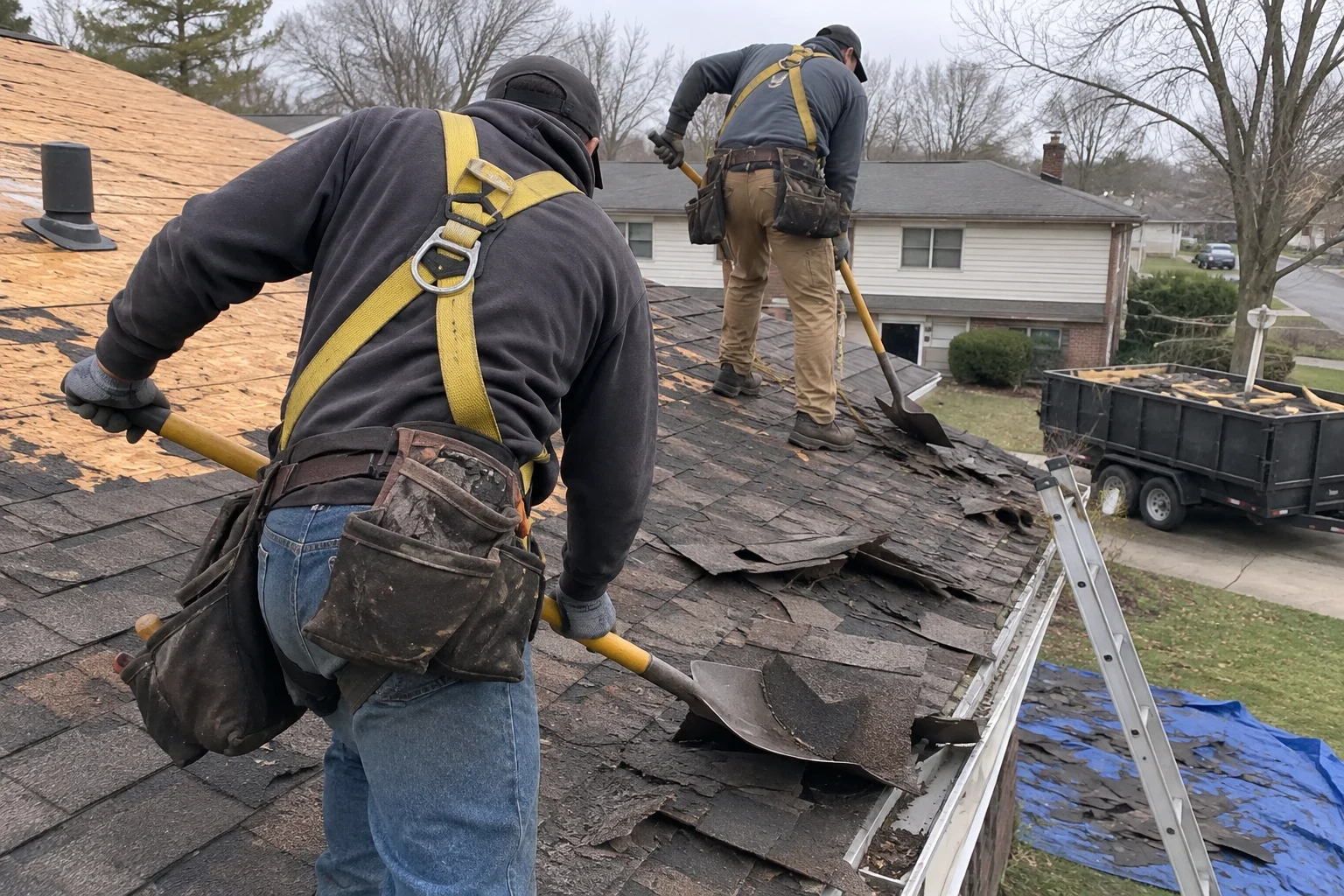
When it makes sense to have us look
- A brown spot on a ceiling
- That ring means water already got past the roof. The stain is rarely right below the opening, so someone has to go up and trace it back.
- Dark grit in the gutters or at the downspouts
- Those granules shield shingles from the sun. When they wash down in clumps, the shingles are aging faster than they should.
- Heavy ice on the eaves last winter
- Thick ice along the edge usually means warm air is leaking into the attic. It can back water up under the shingles, so it pays to find the cause before the next cold snap.
- Damage you can see from the yard
- Bent, lifted or missing shingles visible from the ground usually mean more problems up close.
- A roof past 15 or 20 years
- A regular check on an older roof tells you roughly how much life is left, so you can plan for a replacement instead of being surprised by one.
- A home sale on the way
- Buyers and sellers both do better knowing the roof's condition before the deal is signed.
What the visit looks like
- 1
Book a visit by phone
Tell us how old the roof is and what you've noticed, even if it's nothing at all. We settle on a time and let you know what we'll need, which is mostly a way into the attic.
- 2
A walk around the house
First we stay on the ground and go all the way around, looking at roof lines, gutters, downspouts, fascia and soffit for sags, stains or anything that looks out of place.
- 3
Up top
If the roof is safe to walk on, we go over the shingles, flashing, vents and boots by hand and take photos along the way. If it's steep or brittle, we work from a ladder at the edges and rely on close-up shots.
- 4
Under the roof
In the attic we check the decking, the insulation and how air moves. Slow leaks and weak ventilation tend to show up here before anywhere else.
- 5
Going over the photos with you
Before we go, we sit down with you and look through the pictures. You hear what's failing, what's holding up and what we'd suggest. Any work gets a written price, and you can take your time deciding.
What moves the price of a roof check
A roof check costs a lot less than chasing a slow leak for years. We give you the price by phone before we show up, so nothing changes at the door. These are the things that raise or lower it.
- Roof size and pitch
- A large or steep roof takes longer to cover safely. A low, simple ranch roof goes faster.
- Stories and ladder access
- A two-story home with narrow side yards means more ladder moves and setup than a one-story with open ground around it.
- Getting into the attic
- A pull-down ladder in the hall is quick. A tight hatch in a closet, or a finished attic with little open space, takes longer.
- A formal write-up for a sale
- If a buyer, seller or lender needs a detailed report, putting it together adds time. We tell you that before we book.
Questions we hear about roof checks
- How long does the visit take?
- Most roofs take us about an hour. A big or steep one runs a bit longer. Talking through the photos afterward takes as long as you want. We don't rush that part.
- Do I need to be there?
- It helps if you're around near the end. We need a way into the attic, and it's easier to show you the pictures in person. If you're stuck at work, we'll walk you through every photo over the phone instead.
- Are you going to push a new roof on me?
- No. You hear what we actually found, nothing more. Plenty of roofs need a few small repairs, and some need nothing at all right now. When a full replacement does make sense, the photos show you why, and the choice is yours.
- How often should my roof be checked?
- About every other year is a good rhythm. After a roof hits 15 years or so, once a year is smarter. A winter with thick ice along the eaves is also a good reason to have someone look.
- Can you fix small things on the same trip?
- Nothing gets done without your okay. If we spot something minor, like a cracked pipe boot, we show it to you and give you a price. If you want it handled, we can sometimes do it right then or set a time to come back.
- Do you work outside Roseville?
- Yes. We also cover nearby towns like Zanesville, New Lexington and Lancaster. Call and tell us where you are, and we'll let you know if we can get to you.
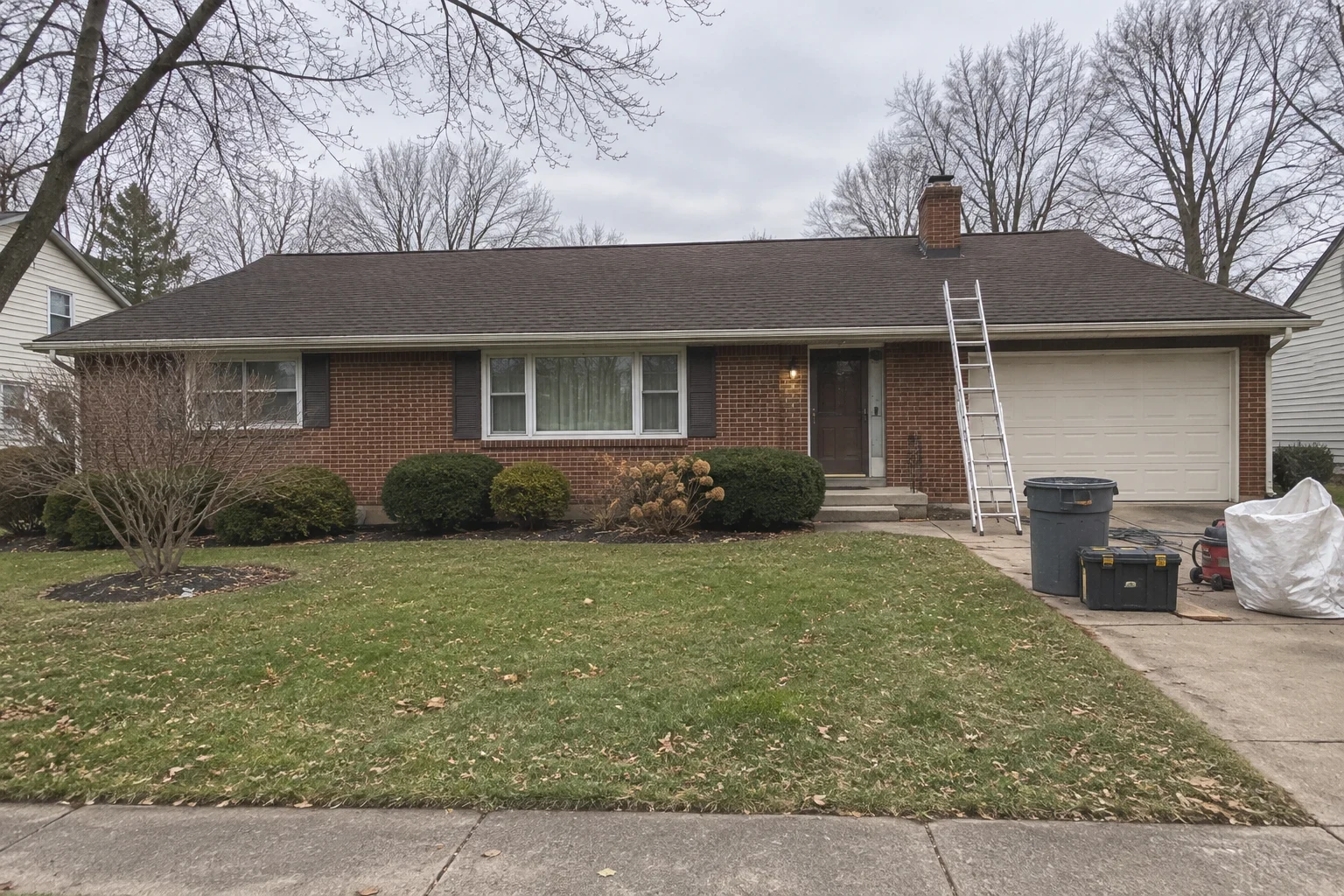
Find out what your roof actually needs
One visit covers the roof, the flashing and the attic, and you get a plain answer backed by photos. What happens after that is up to you.