ServicesRoof Replacement
Roof Replacement in Roseville, OH
We replace a roof only when the inspection says it's time. First we walk the roof, check the attic and show you photos. Then you get a written estimate that lists every part of the job, so you know what you're paying for.
Repair or replace: how we decide
A first leak rarely means you need a whole new roof. A shingle that blew loose or a split rubber collar around a plumbing vent is a fix, and we'll say so. That kind of work goes to our roof repair crew.
A new roof starts to make sense when the trouble is everywhere. Worn shingles shedding their granules, soft wood under your feet, or water coming in at several spots usually mean you'd spend more patching over the next few years than you would replacing it now.
That's why we look first and talk second. You get the same photos we took, and the choice is yours.
What a full replacement includes
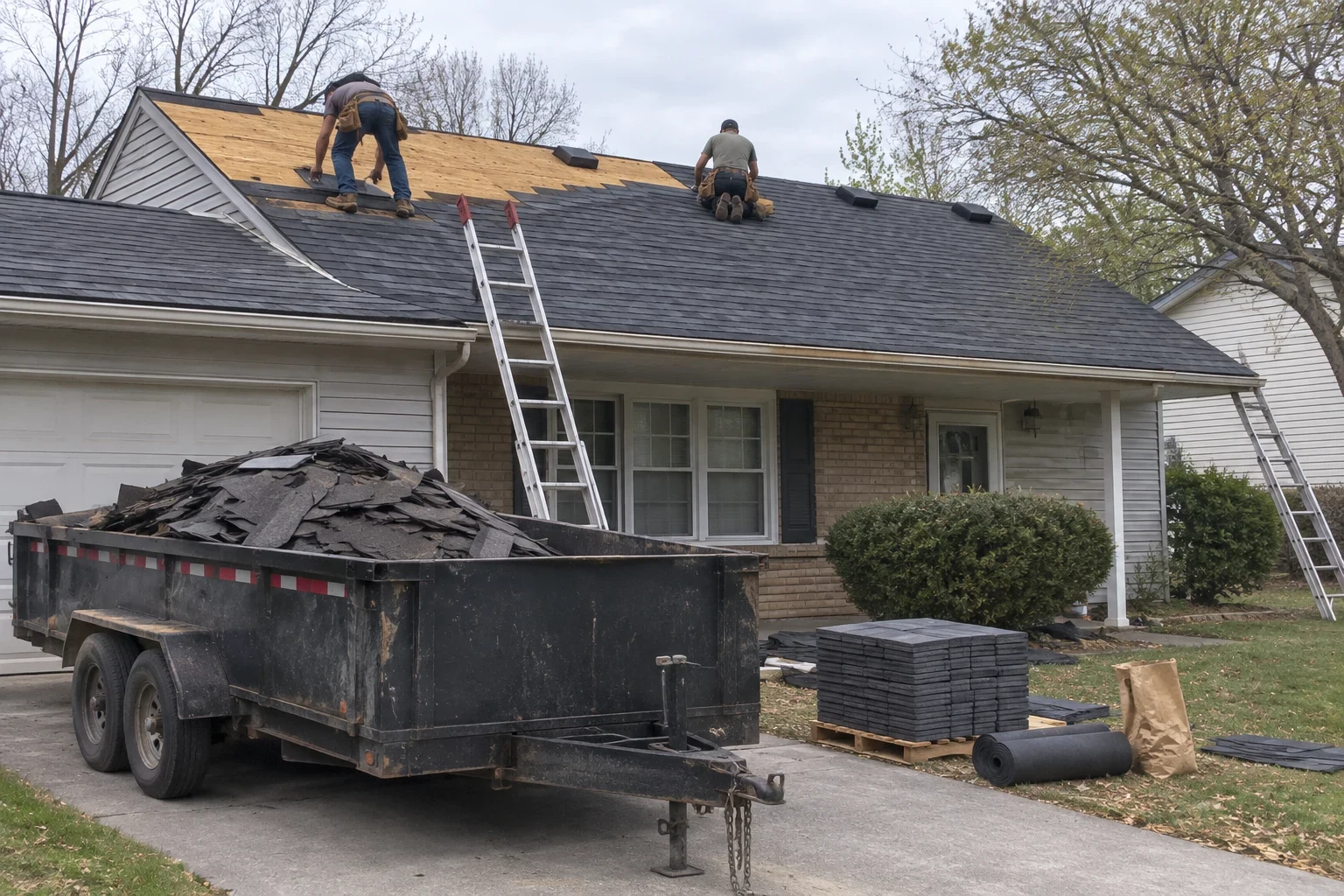
Stripped to the wood
Every old shingle and all the old underlayment come off. Layering new over old adds weight and covers up trouble, so it's not something we do.
Repairing bad deck boards
With the deck bare, we go sheet by sheet looking for soft or rotted wood and swap out what's bad. You see photos and a sheet count before it gets covered.
Membrane at eaves and valleys
Ohio winters freeze and thaw again and again, driving ice up under the eave shingles. A self-adhering membrane goes down along the edges and through the valleys, where water runs heaviest.
Fresh flashing and balanced venting
The old metal at chimneys, walls and pipes is replaced, not reused. Vents are arranged so air comes in near the eaves and out near the peak, pulling heat and damp out of the attic.
Shingles and the ridge
Every shingle is nailed the way the maker's instructions spell out. Last of all, ridge cap goes on across the peak.
Yard protection and daily cleanup
Tarps cover your beds and plants while the old roof comes off. At the end of each day, someone on the crew rolls a magnet sweeper across the grass and driveway for loose nails.
Warning signs your roof is wearing out
- Worn or curled shingles
- Grit piling up in the gutters and dark, bare patches on shingles mean the top layer is used up. Edges that curl up give the wind something to grab.
- Water getting in at several spots
- A single leak can often be fixed. Ceiling stains showing up in two or three rooms tell you the roof is giving out in more than one place.
- A roofline that dips or gives
- A low spot you can see from the curb, or wood that bends when you step on it, usually means water has been soaking the deck for some time.
- Light or moisture in the attic
- Sunlight coming through the boards, damp insulation or dark marks on the rafters all deserve a closer look. Frost on nail tips in winter is another clue.
- Patch after patch
- Once you've paid for three fixes on the same roof in a short span, putting that money toward a new roof may make more sense. We'll tell you straight which way we'd go.
What happens from first visit to final walk
- 1
Look it over and take pictures
We climb the roof and check the attic from inside. Then we show you the photos and explain, in plain words, what's failing and what's still fine.
- 2
Line-item estimate
Tear-off, materials, a per-sheet decking price, flashing and cleanup each get their own line. If a repair would serve you better, we tell you. When your village or township needs a permit, we take care of pulling it.
- 3
Strip and cover
The crew tarps the yard, takes off the old roof and fixes any bad wood. We only open as much roof as we can seal up before the end of the day.
- 4
Build it and check it together
Underlayment, flashing, shingles and vents go on. When it's done, we walk the roof and your yard with you before packing up.
What sets the price of a new roof
We price a roof from what we see on it, not from a guess over the phone. How big it is and what shape the wood underneath is in account for most of the total. Each item below gets its own line on your written estimate.
- Roof area and steepness
- Bigger roofs use more material and more labor time. On a steep slope the crew moves slower and has to work from harnesses and roof jacks, and that shows up in the price.
- How many old layers
- Some houses have two or three layers of shingles stacked up. Each extra layer means more time stripping and more weight hauled to the dump.
- Wood under the shingles
- Nobody can count rotten boards until the old roof is off. That's why your estimate lists a set price for each sheet we replace, so the number never comes as a shock.
- Chimneys, skylights and valleys
- Every opening and every place two slopes meet needs its own flashing. A plain two-sided roof is cheaper than one with lots of corners and angles.
- Shingles and upgrades
- The shingle line you pick, a better underlayment or extra vents all move the total. We walk you through what each choice gets you for the money.
Common questions about roof replacement
- How many days will the job take?
- One to three days covers most houses. A large or steep roof, or a deck with many rotten sheets, stretches that out. Rain in the forecast can move the start, since we won't strip a roof that's about to get wet.
- Can new shingles go right over the old roof?
- Not on our jobs. A second layer holds heat, puts more load on the framing and covers up soft wood. Stripping to the deck lets us find and fix those boards before anything new goes down.
- Does someone need to be home during the tear-off?
- No. We'd still like a few minutes with you before work starts and again at the end. Expect plenty of noise, and a little dust may drop into the attic. Moving cars out of the driveway and taking fragile pictures down from the walls makes the day go smoother.
- What happens if the decking is rotten?
- We pause and photograph it so you can see it for yourself. Your estimate already shows the price for each sheet, so you know what it will cost before we swap a single board.
- Do you replace roofs outside Roseville?
- We do. Our crews work in Zanesville, New Lexington, Lancaster, Newark and other towns nearby. The Service Areas page lists more of them.
- Should the gutters be done along with the roof?
- Only if they need it. Solid gutters stay where they are. If they sag or the fascia board behind them has rotted, it makes sense to do gutters and soffit and fascia work while we're already working at the roof edge.
Learn what shape your roof is in
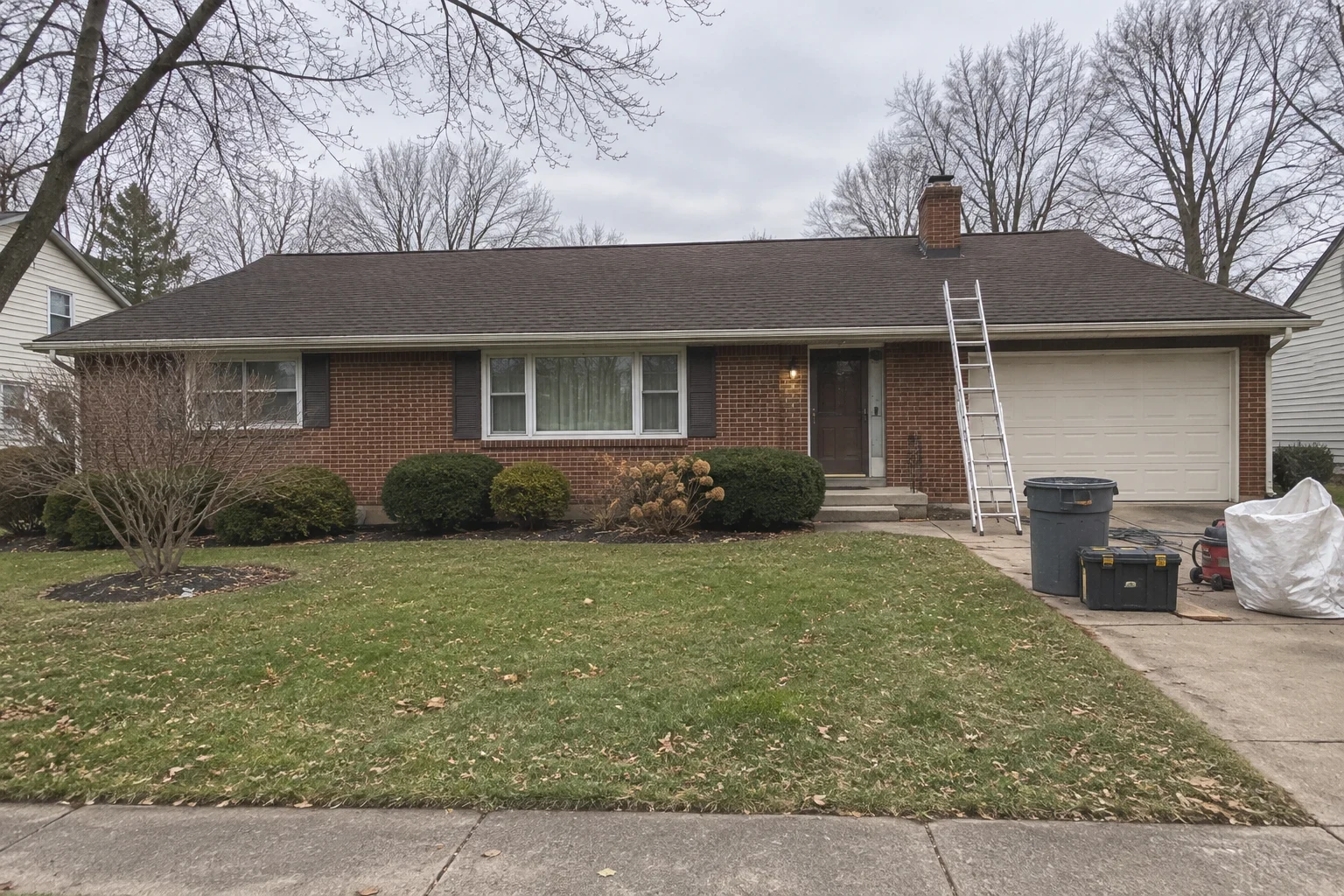
We'll check your roof, go over the photos with you and say whether it calls for a repair or a new roof. The decision stays yours.